First of all, conferences went really well this year. My students did a great job 'running the show' and displaying their learning to their parents. They also surprised me because there was a point where I was explaining their PYP portfolios and I thought no one was listening, but most of them were able to explain to their parents what they were all about. I even heard some of them using the same language I used! So sometimes when I think my students are not listening, they actually are. Who would have thunk!
So we just wrapped up our Marketplace unit, which was awesome! For our summative, or final project, students created their own classroom business. They chose to produce bracelets and sold them for $1.00 during lunch. We counted the up the profits and students end up making $94.00! They decided they wanted to spend some of it on themselves as a special treat, like popsicles or ice cream, and then donate the rest to the school.
 |
| Making posters to advertise our business |
|
|
 |
| Making our product |
 |
| Selling our product |
Since we finished up a unit, that means it is time to begin another! At the start of every PYP unit, it is important to find out what students know about the topic and what they are curious or wondering about because students drive where we go in the unit. The way we get this information is through provocations. Provocations not only help teachers learn what students know and want to learn, but it gets students excited about the next unit as well.
There are many different ways to do a provocation. A lot of teachers pull out pictures that relate to the unit and ask students what they know or notice about the pictures. Some teachers do KWL charts or have students to a free write on a topic. But some of the best provocations get students to really think and get them involved in the topic.
At an IB Conference, there was a teacher that was teaching about migration and she wanted her students to understand what it means to migrate and to constant pack up and move. She told her students to bring their backpack in and put any materials that they students thought they would need during the day in their backpack. Some students packed everything from their desk, including textbooks they had never touched all year while others packed a notebook and pencil. Throughout the day students moved from the classroom, to outside, to the library and all around the school! Students were able to experience what it was like to migrate from one place to another and how you have to think about what items are truly necessary. This provocation got students excited to learn about migration as well as provoked a lot of questions they wanted to investigate.

My goal this year was to work on improving provocations by doing more than showing students pictures and asking what they knew or questions they had about them. Our new unit surrounds the phrase "The Power of One", where students are to understand that all it takes is one person to influence change in the world.
I started by having students discuss what this phrase means to them and discussed how these people are considered heroes. I then had them create a bubble map by putting 'Hero' in the middle and they had to write characteristics of a hero and write people who are/were heroes.

But the most powerful part of the provocation came two days later. I set up a scenario where students were going to vote for a book that we were going to purchase for our class from the book fair, but the only students that were allowed to vote were students that were 7 years old. I told my 7 year old students to put their heads down and I heard some of my 8 year old students say "Wait a minute, do we get to vote?" I said "You are not 7, so you can't vote". Some of the 8 year old students said they didn't care and it did not bother them, but there were two that were very upset. When asked what they were thinking and feeling they said "This is not fair. It is like how women were not allowed to vote and only men were a long time ago and like how the black people were not allowed to do stuff, but the white people could". (These ideas were discussed on MLK Day.) Some other students also described their feelings. Even the students that could vote said it was not fair. After this discussion I pretended that I didn't really care and still said, "well 7 year old's you are still going to vote, so put your heads down and lets vote."
That's when it happened.
One of the students that was allowed to vote, stood up, took two steps towards me and with his hands on his hips said "Ms. Mulville, this is not fair."
I said "Wait, are you standing up to me right now?" in the most serious tone I could convey.
A bit nervously, he said "Yes, this is not fair."
Non more than a second later, another student came up and said "This is not fair." and the domino affect began. I had 6-7 students standing in front of me shouting "This is not fair!"
This is when the discussion began. Students realized that one person stood up for what was right and then others joined in. Students began to say "It is the Power of One!" Just from this simple scenario students began to understand what this statement meant and how they can make a change.
My students wrote a quick reflection about what happened to them and how they felt and then I asked students to write down names of people that they want to learn about that made a change, or if they didn't know the name of the person, what change they made.
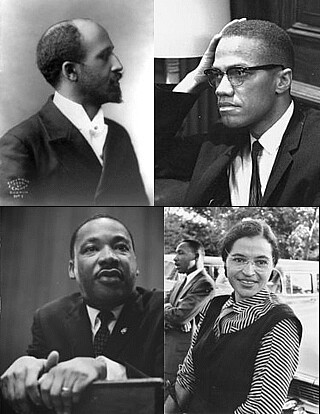
It looks like this unit we will be learning about Martin Luther King, Rosa Parks, Ruby Bridges and Harriet Tubman.
My students are so excited to start this unit and so am I! I can't wait to see what they are going to learn from this unit and the changes they are going to influence in our community.